目次
There is a way to enjoy art without going to a museum or gallery!
It is “public art.” Public art is artwork installed in public spaces such as plazas and parks. Since it is a public space, of course it is free to enjoy.
Therefore, Life Designs would like to introduce public art in the city under the title of “Aichi Public Art Exploration.” You can also enjoy the art while avoiding the three Cs of COVID-19.
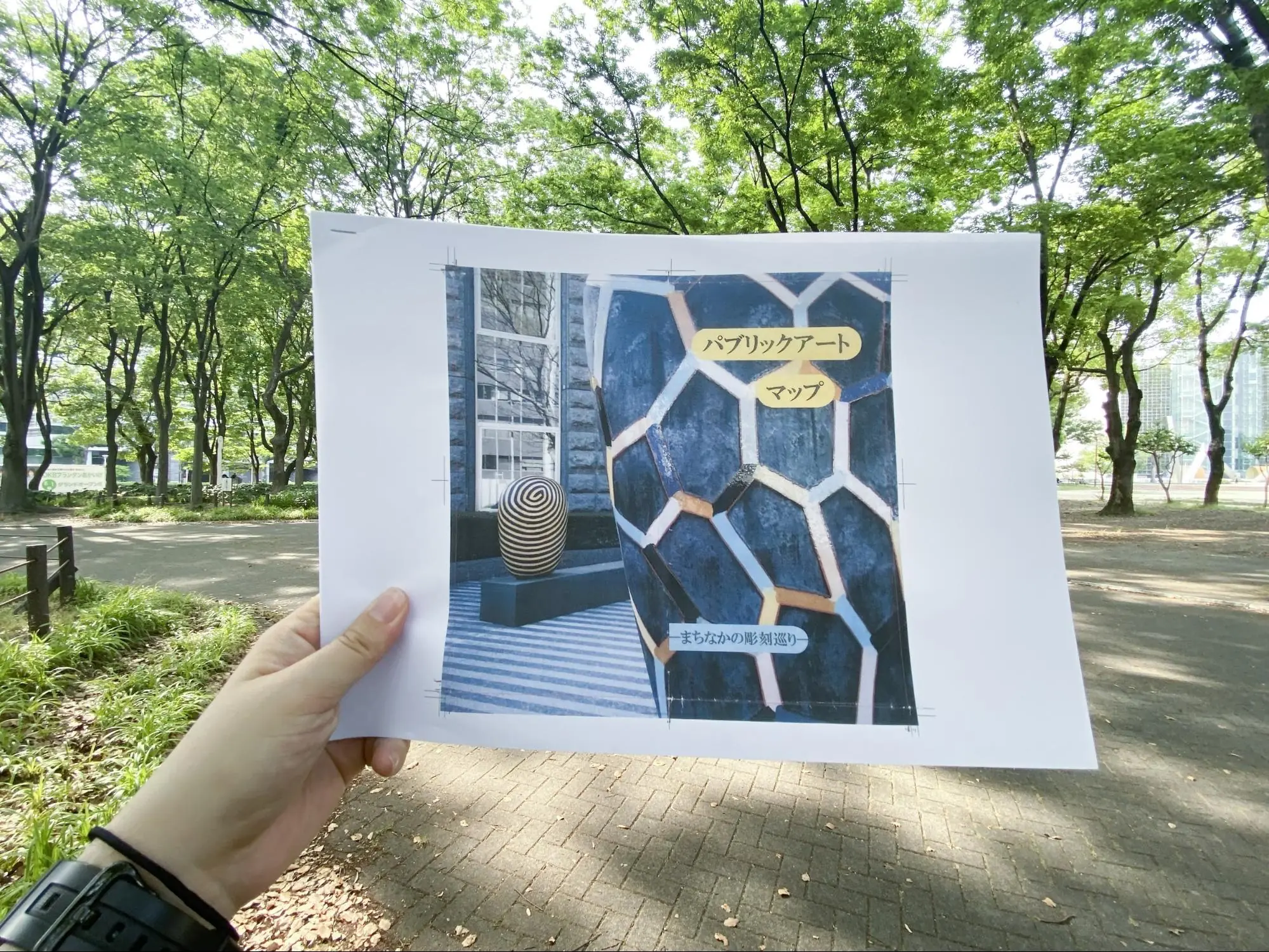
We refer to the “Public Art Map” introduced at the NPO “Enbu”. It introduces 18 areas around Nagoya City. This time, We would like to tour the Meijo Park area. The Meijo Park area has many sculptures.
So, let’s get started!
First, Let’s Go to Meijo Park!
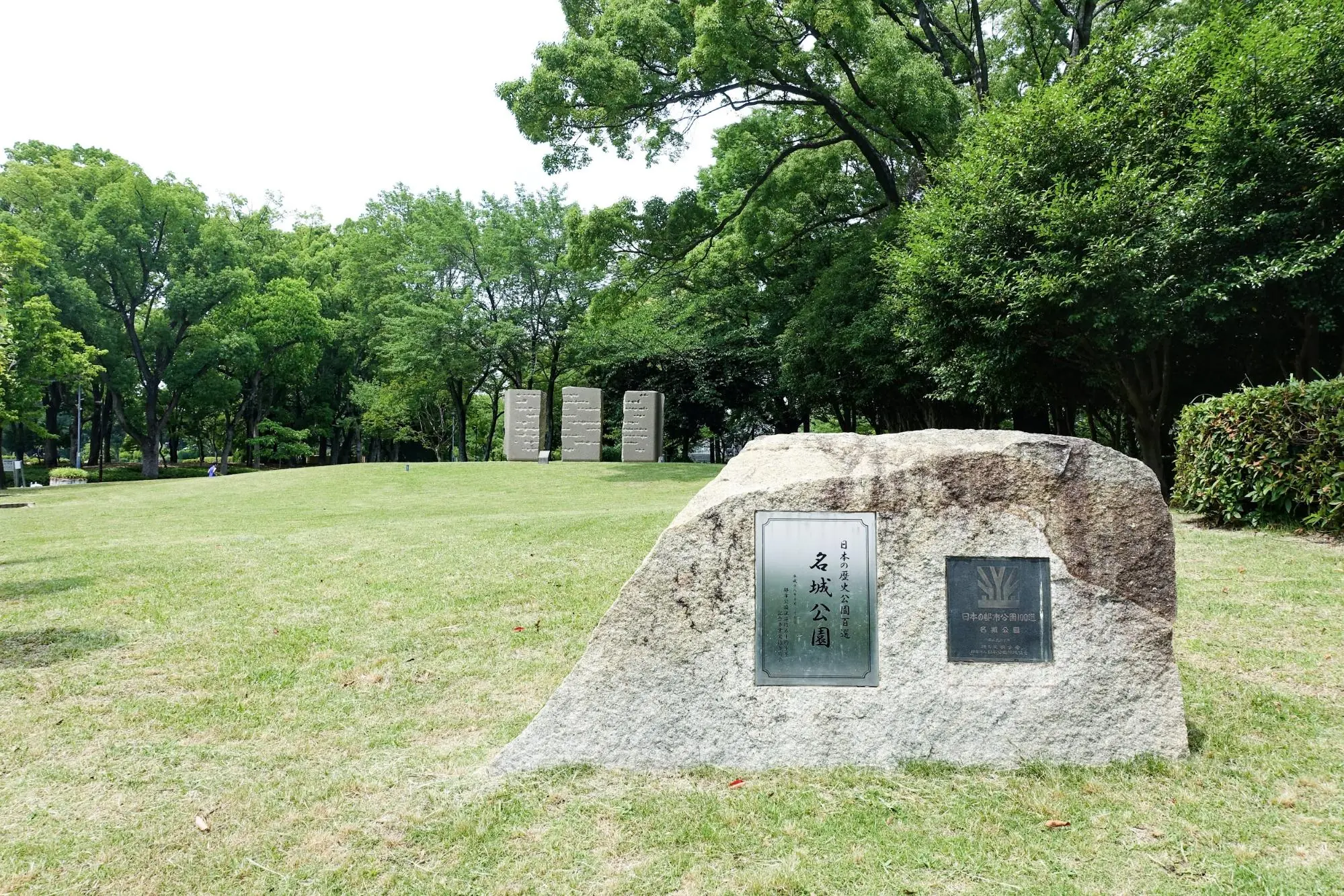
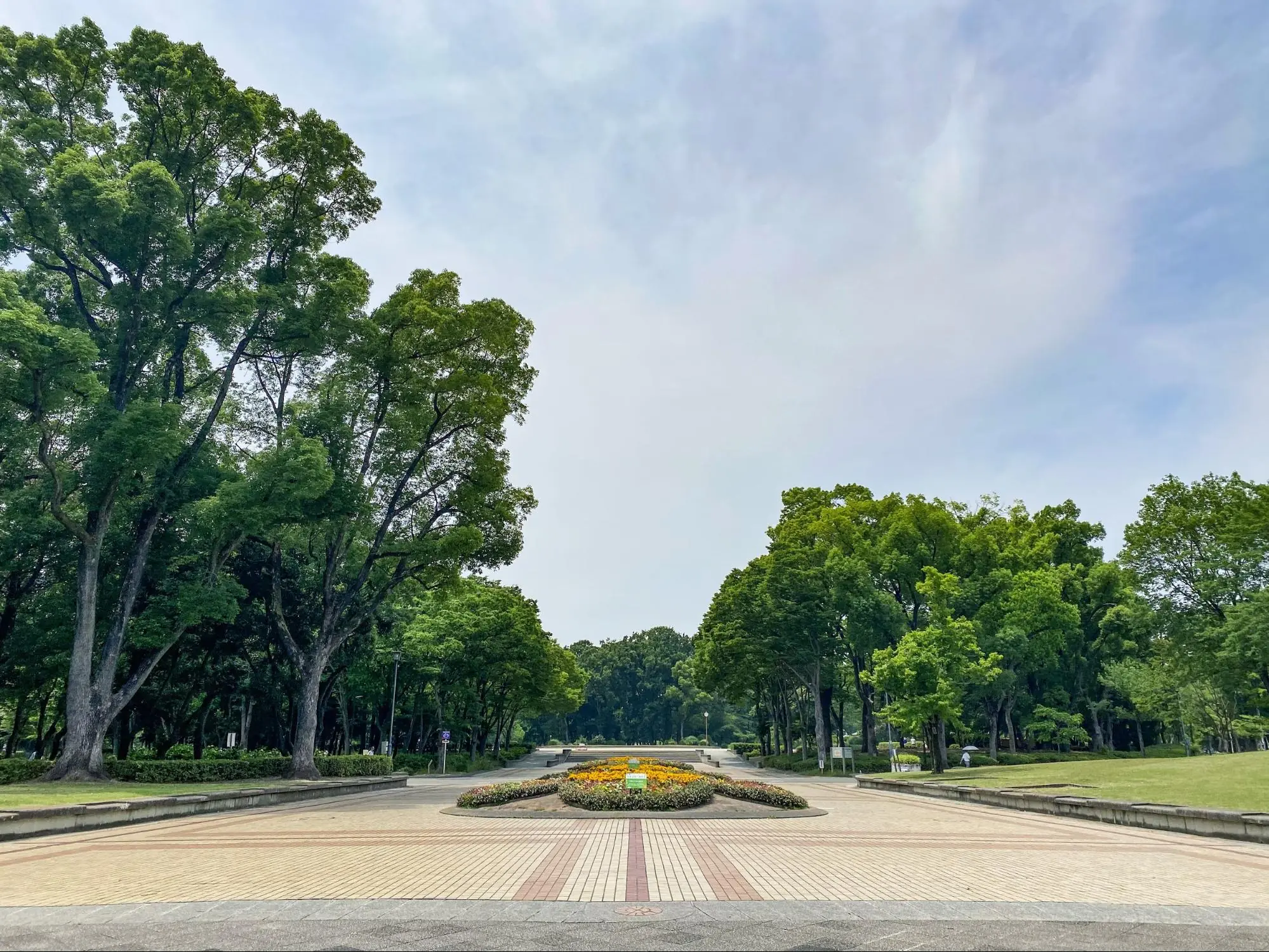
This time, the works are divided into three areas. First, let’s go to “Meijo Park!
Meijo Park is the collective name for several parks centering on Nagoya Castle and extending to Ninomaru, Sannomaru, and Kitaen, and generally refers to Kitaen, north of the castle.
Centered around a grass plaza, the park includes Ofuke Pond, a remnant from the Edo period, a wisteria corridor, and the Meijo Park Flower Plaza, where visitors can enjoy strolls and picnics throughout the four seasons. There is also a running/walking course, providing a favorable environment for runners.
(1) “Ishibumi no Torso” by Masakazu Masuda,
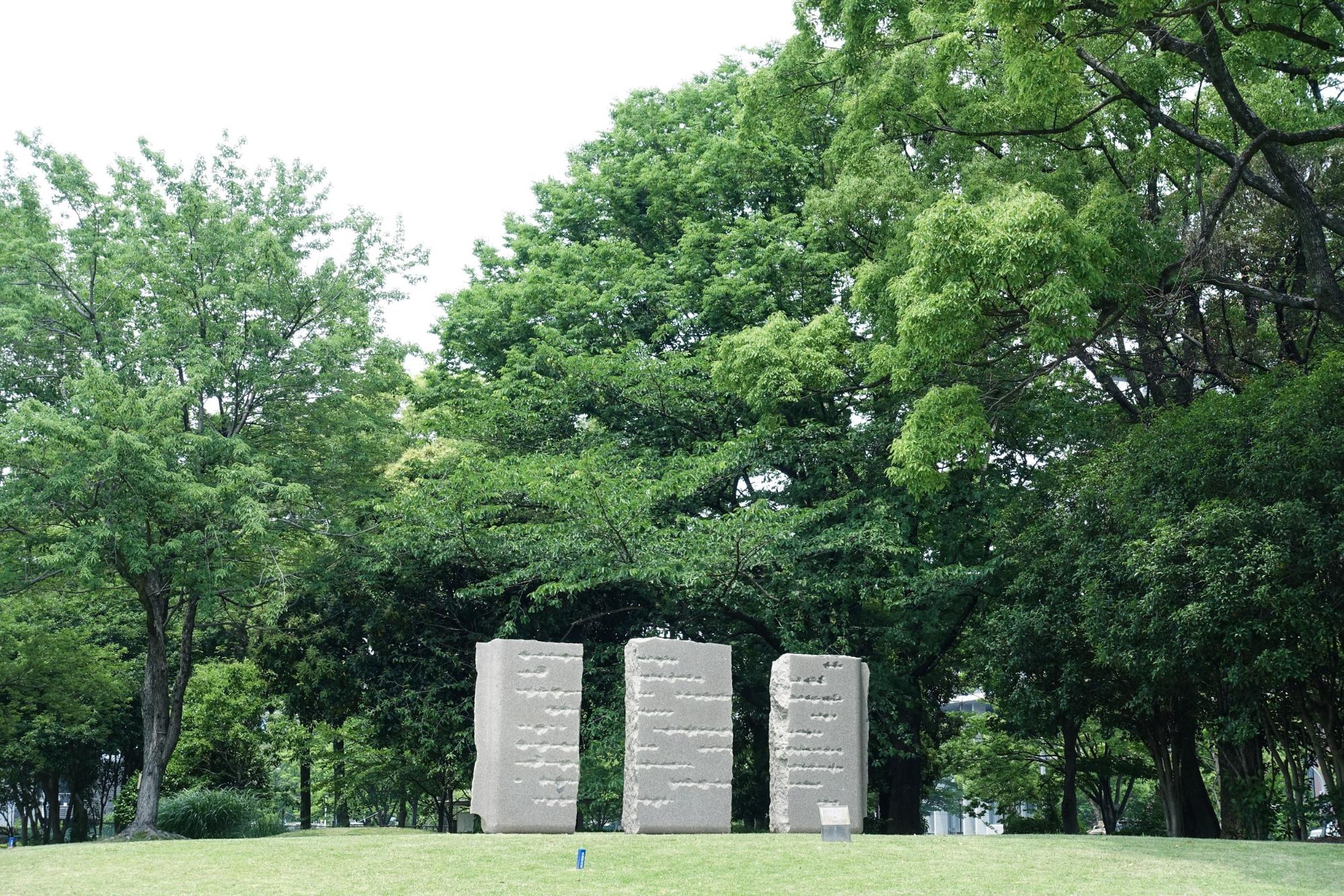
To the immediate right of the entrance is “Ishibumi no Torso” (Torso of Monument), a work by Masakazu Masuda, a sculptor from Hyogo Prefecture. This work won the grand prize at the 9th Contemporary Japanese Sculpture Exhibition.
(2) “Fuyuu” by Shoji Ishiguro
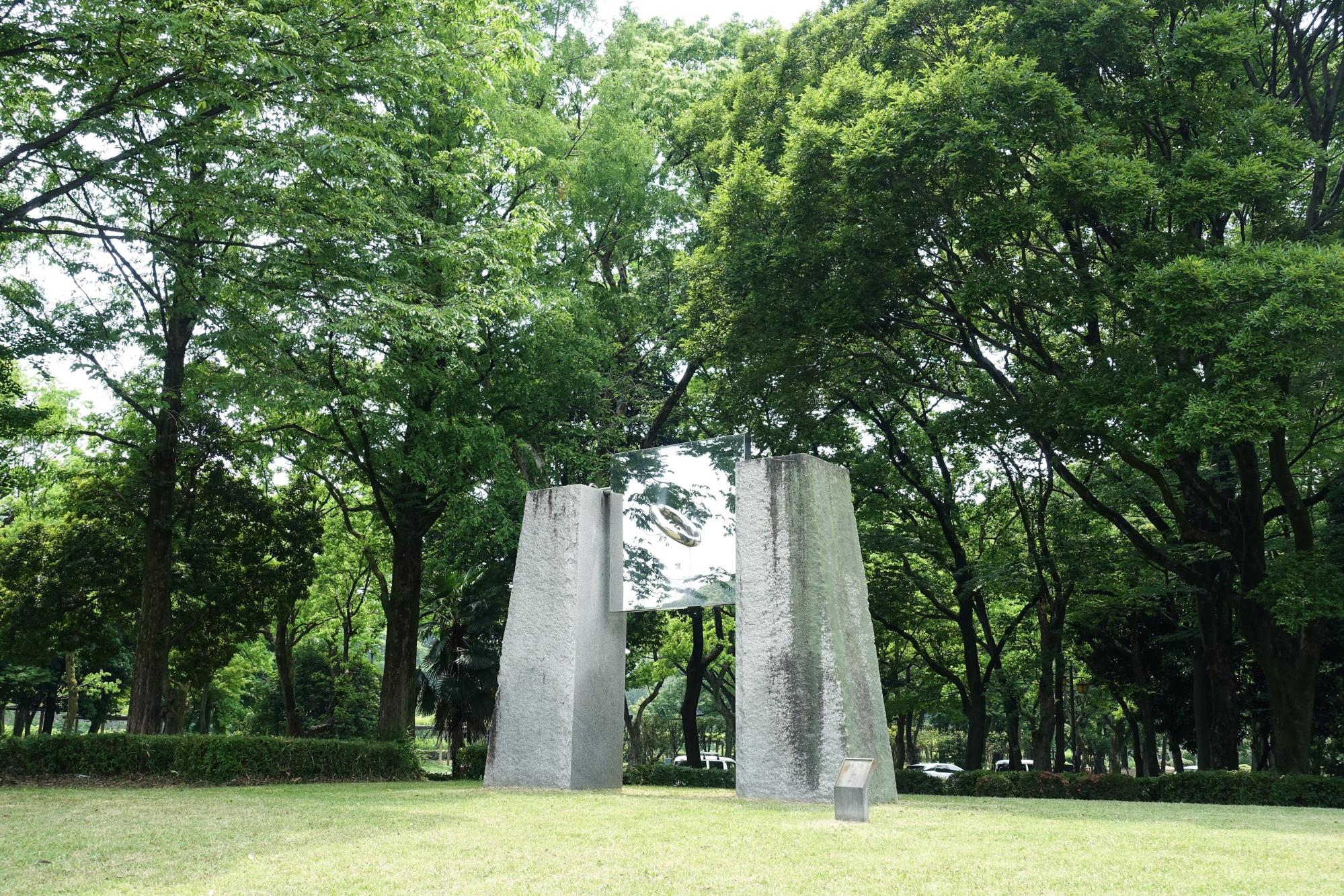
Nearby is “Fuyuu” (Floating), a work by Nagoya’s leading contemporary sculptor, Shoji Ishiguro. The work is displayed amidst greenery, making it look like an outdoor art museum.
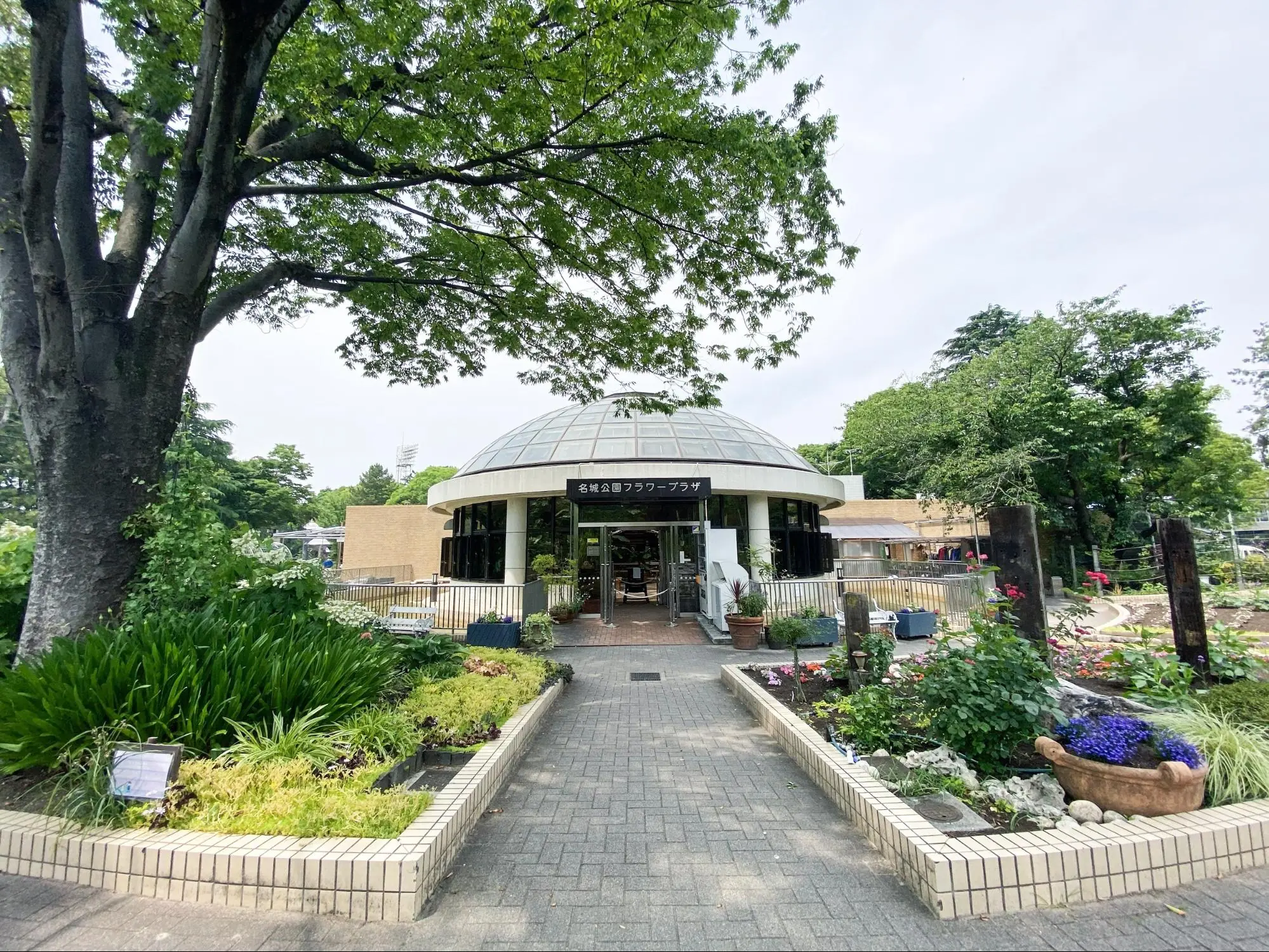
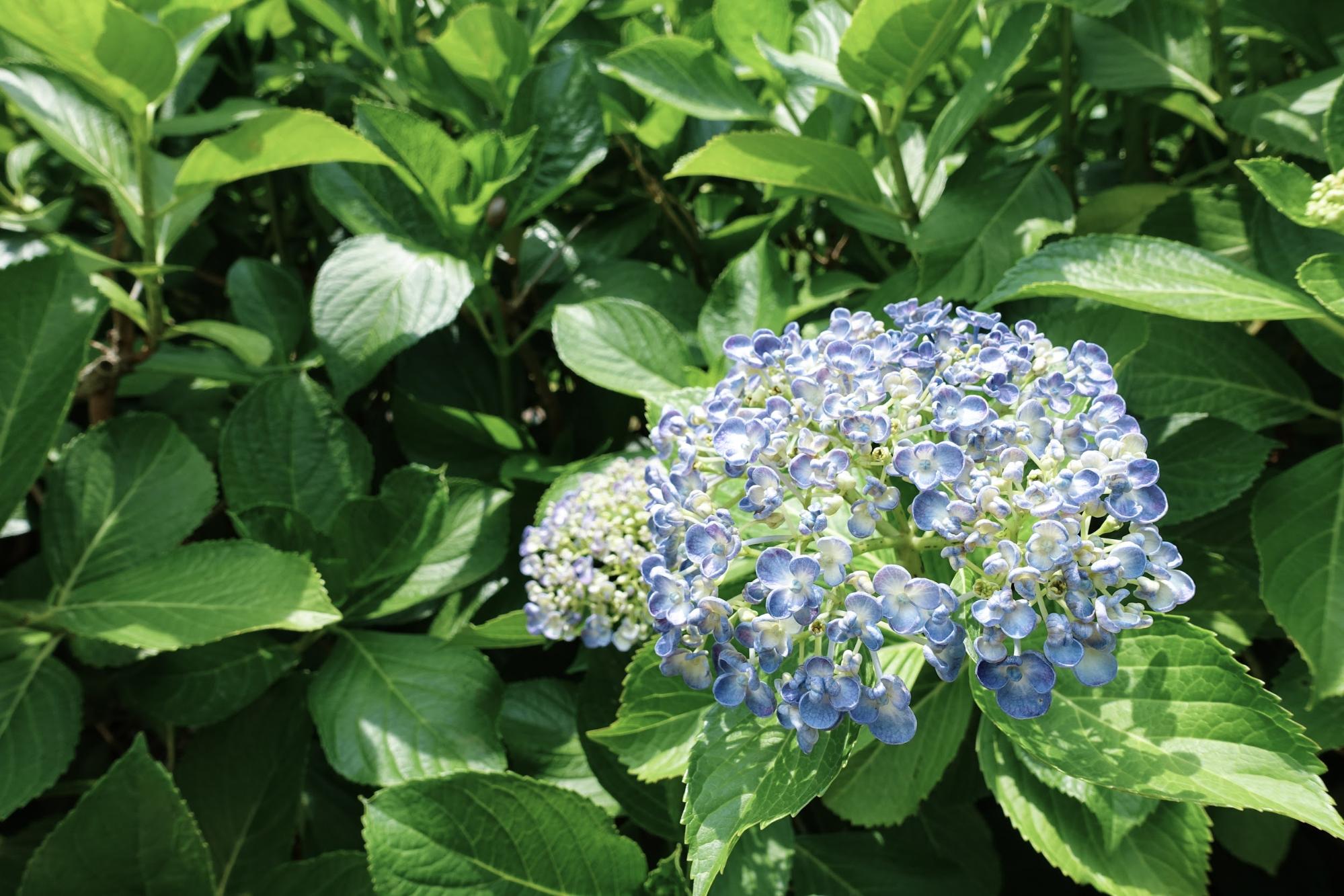
Next, go to Meijo Park Flower Plaza. Here, visitors can enjoy seasonal flowers and greenery. On the day we visited, the hydrangeas were at their best.
(3) “Steps of Dance” by Sergio Capellini
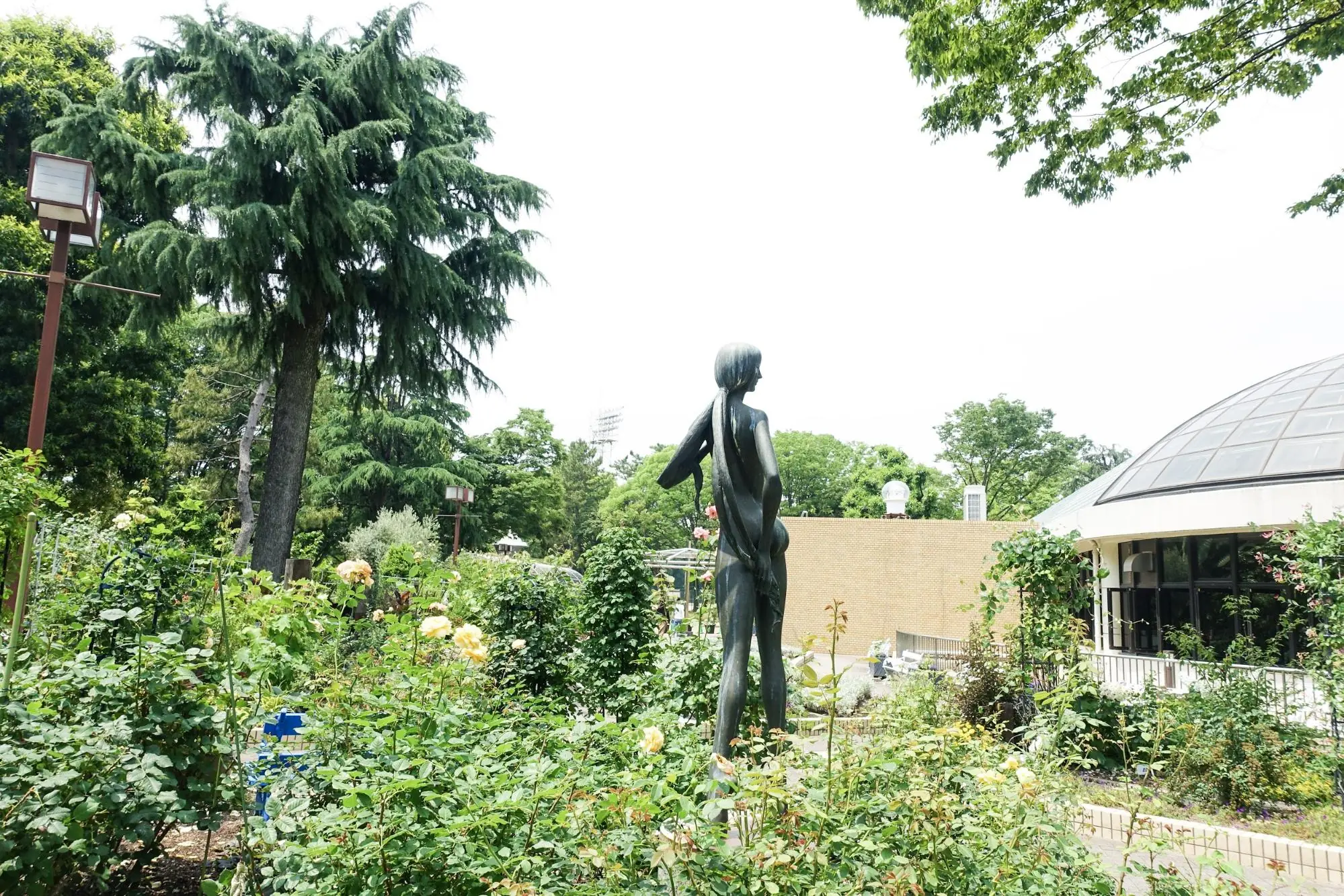
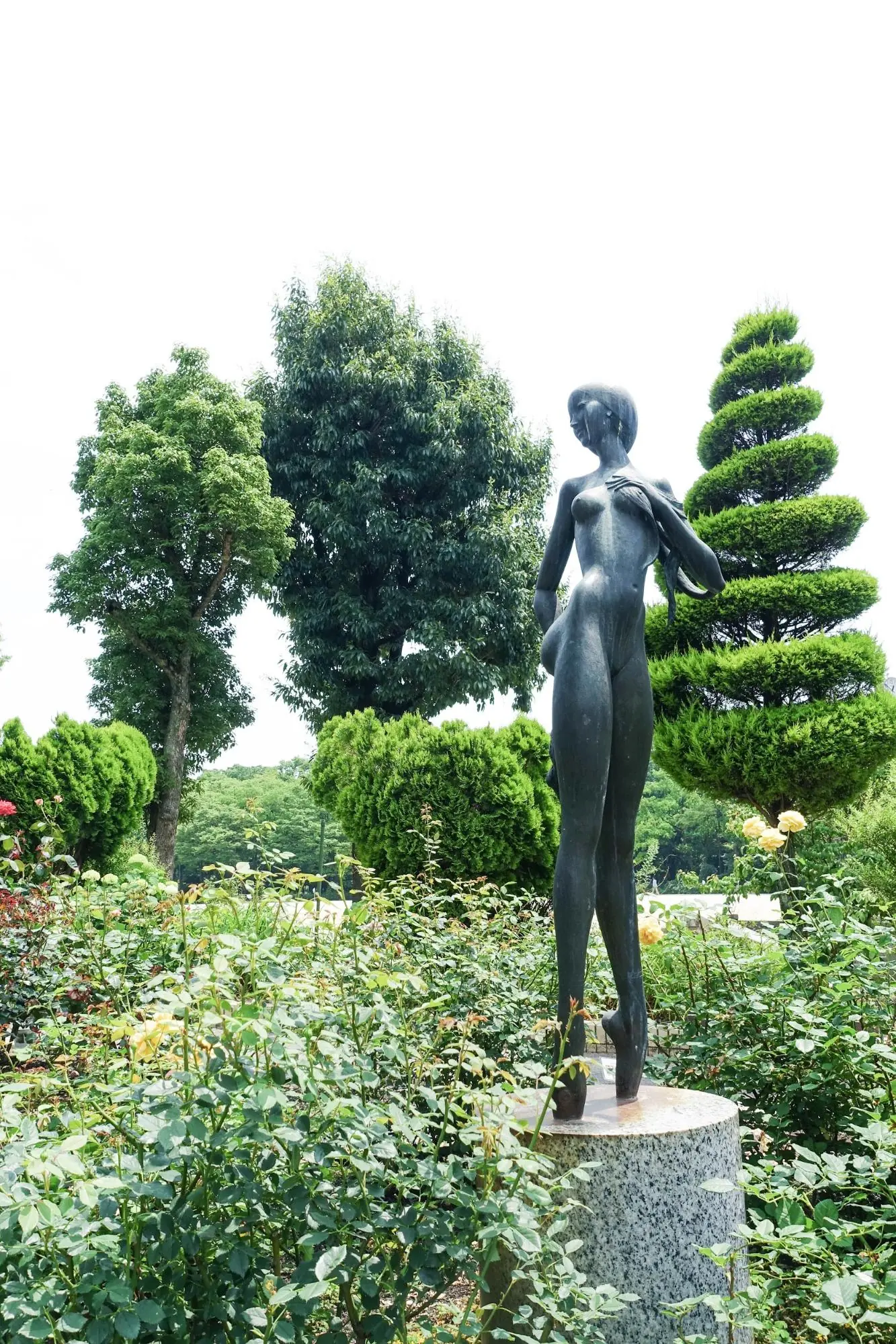
At one corner of the Meijo Park Flower Plaza is “Steps of Dance,” a work by Italian-born Sergio Capellini. The theme of his work is consistent: the message of peace, faith, and love is incorporated into the figures.
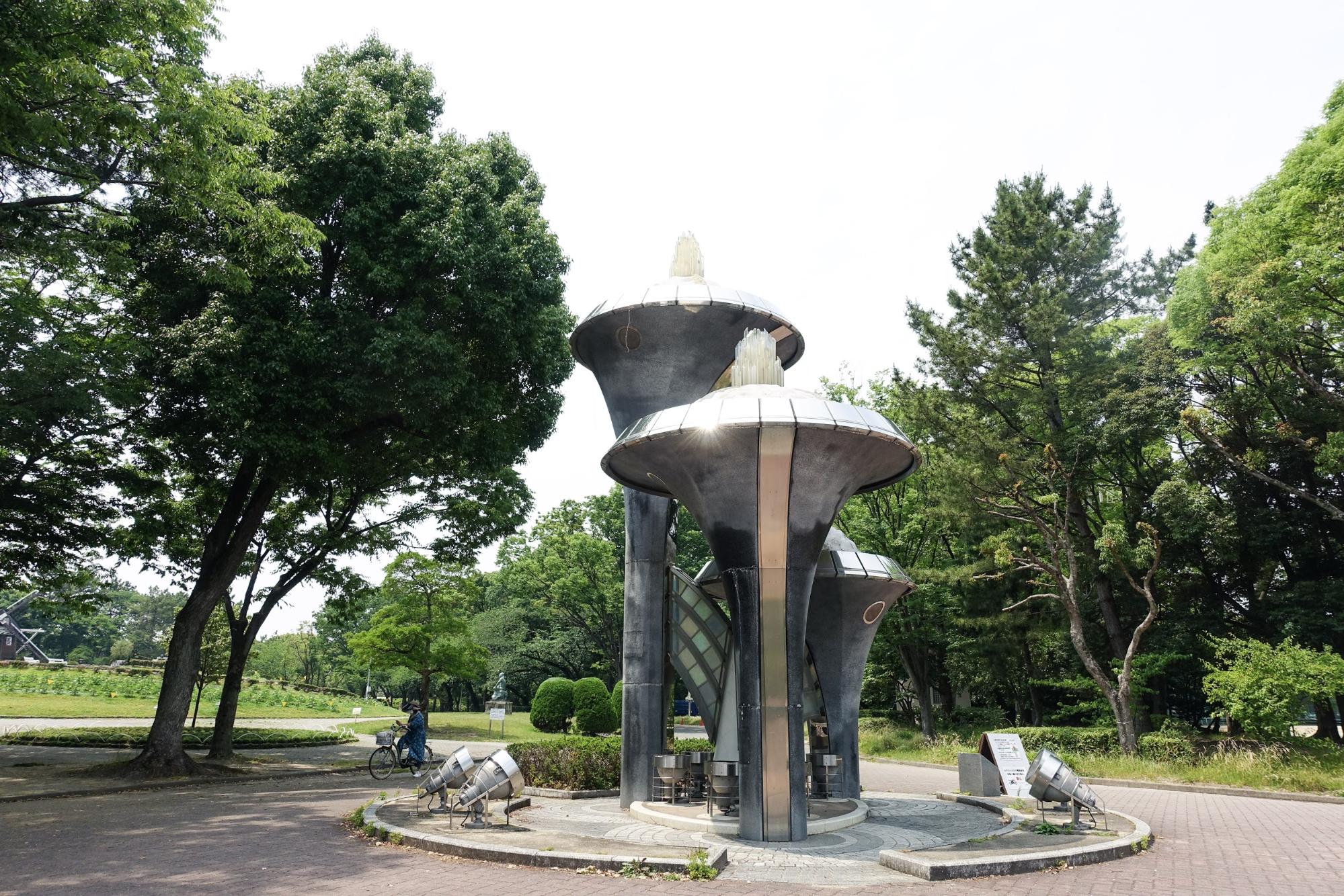
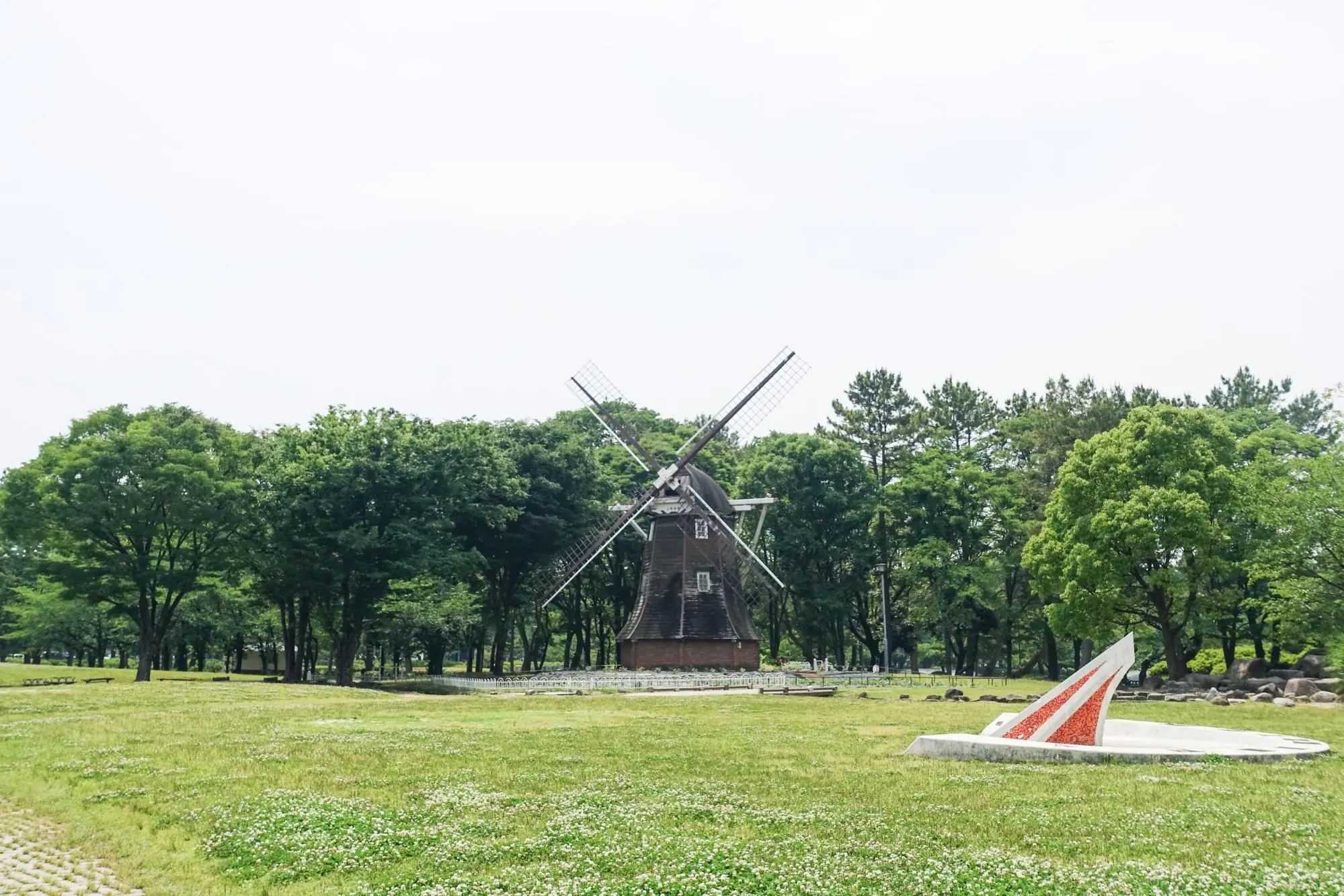
We headed toward the grassy area in the center of the park. The monument on the way is also a work titled “Lily Poem,” but it was not listed on the public art map.
(4) “Seishun” by Seibou Kitamura
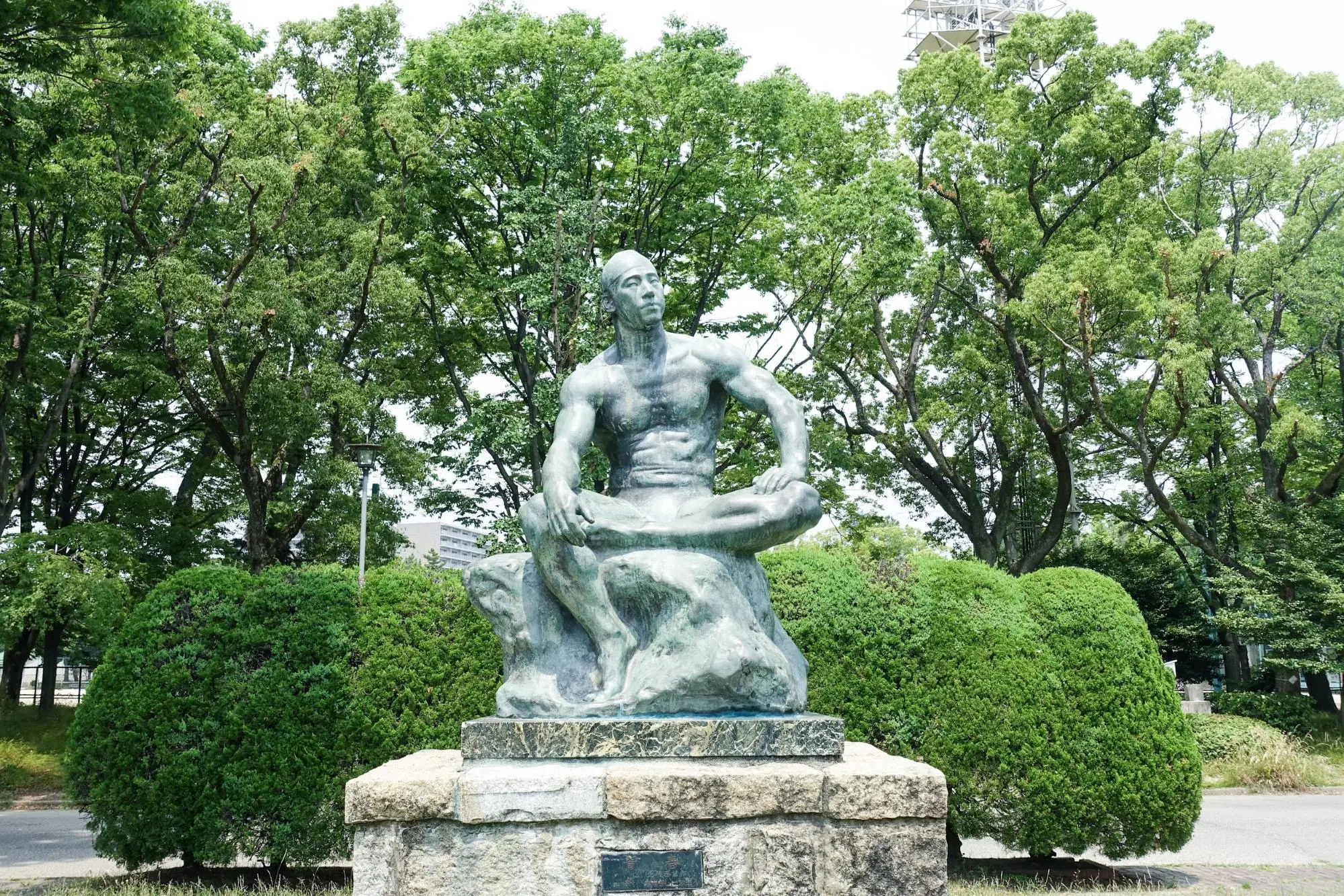
Standing grandly next to the grass plaza is “Seishun” (youth, springtime of life), a work by Seibou Kitamura, a sculptor from Nagasaki Prefecture.
Mr. Kitamura is the creator of the famous “Peace Statue” in Nagasaki Peace Park and a master sculptor who has made brilliant achievements in the history of Japanese sculpture. He left many works with motifs of peace, freedom, and religion.
Let’s go through the grass area and go to the back of the park.
(6) “Seiten” by Takeshi Ishida
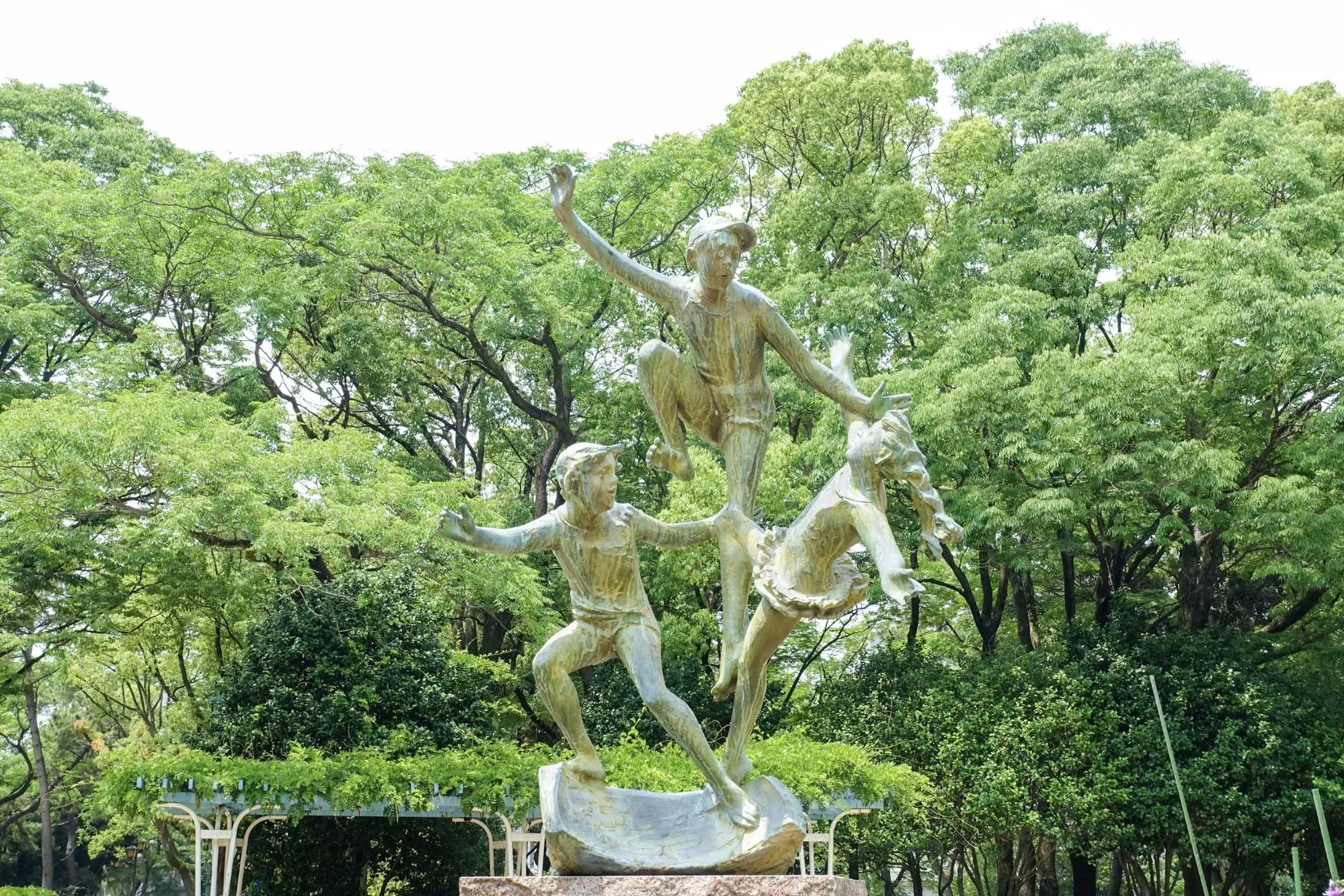
Several artworks were exhibited in a small plaza. This is “Seiten” (clear sky), a work by Takeshi Ishida, a sculptor from Aichi Prefecture.
His sharp and sophisticated sculptural expression is called “Ishida Sculpture,” and many of his works have been installed in Hawaii, Tokyo, Aichi Prefecture, and other locations in Japan and abroad. Until 2004, he was a professor at Nagoya University of Arts.
(7) “Dou-hyo, Hato” by Yoshitatsu Yanagihara,
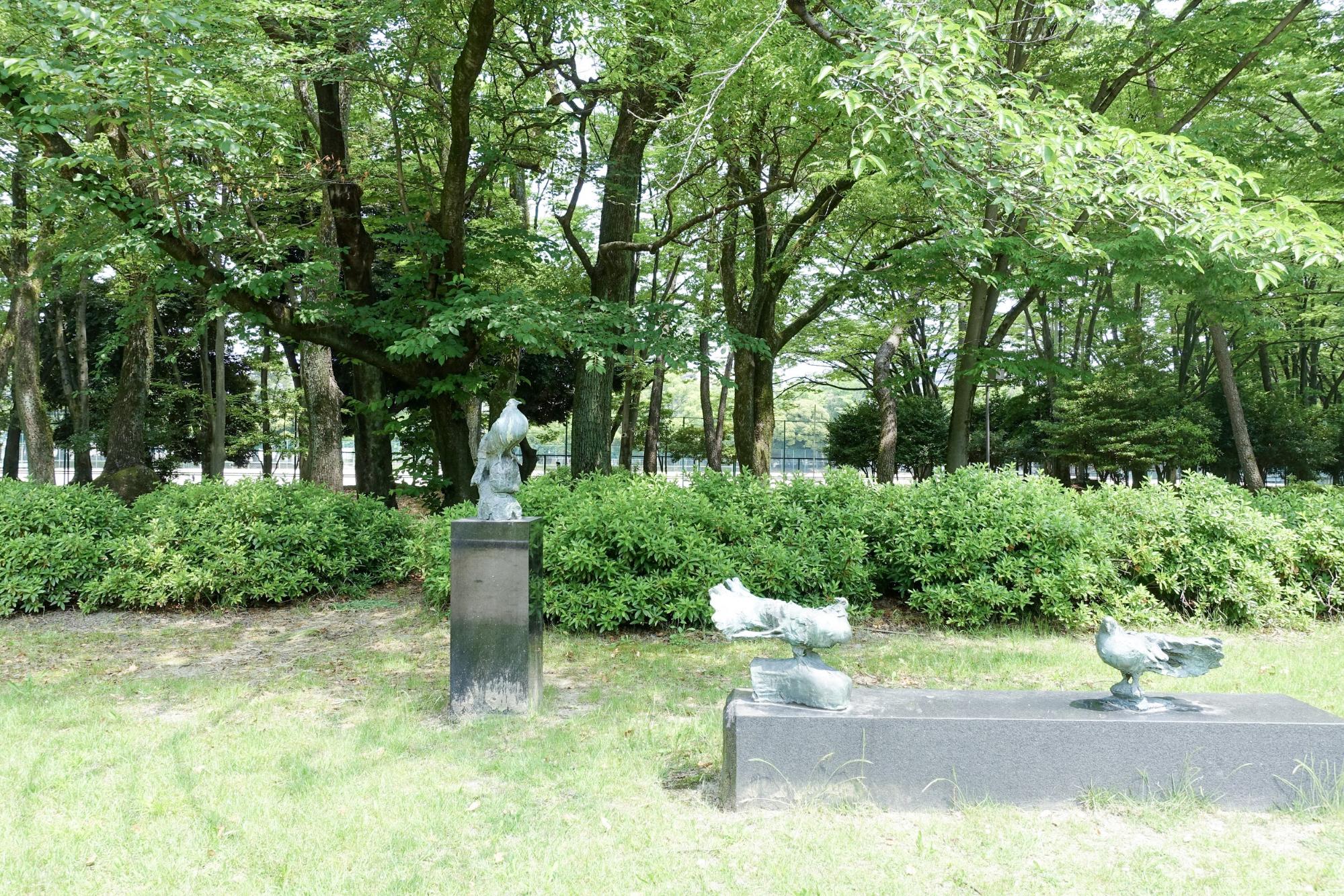
The series entitled “Dou-hyo” (Signposts) featuring ravens and doves (Hato) is one of Yoshitatsu Yanagihara’s representative works.
(8) “Angel” by Sawada Zokei Kenkyujo Co.
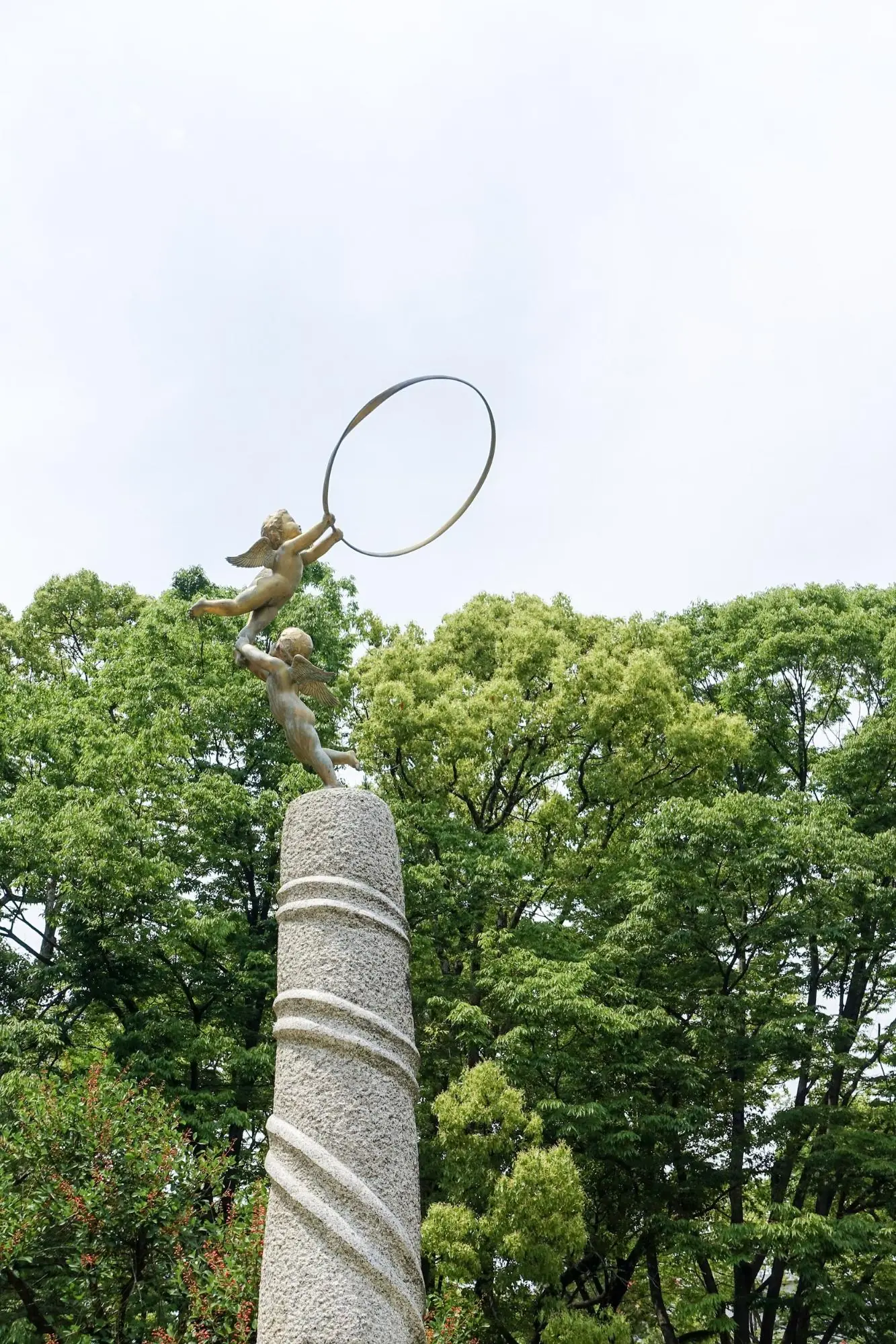
Was this work created by a company? We tried to find out, but could not find any details at …….
There is also Yutaka Ishikawa’s work “Whispering” in this plaza, but we could not take a picture of it because there were people having a picnic in front of the work. But such happenings are also a part of public art.
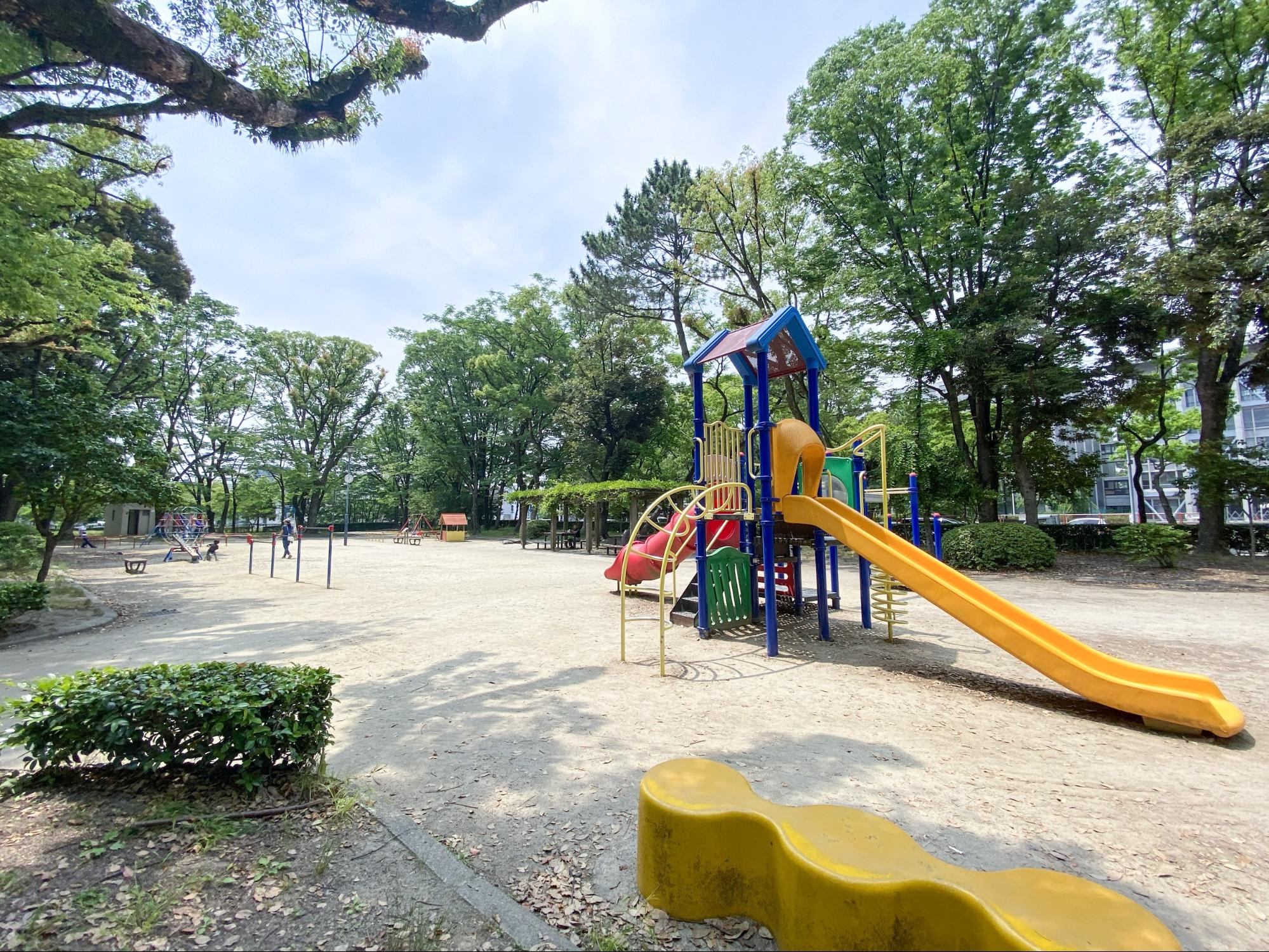
At the back of the plaza, there was a “Children’s Square!” There are many playground equipment for children to enjoy, such as swings, seesaws, and slides. It is a perfect place to take a break.
(9) “Seinen” by Kazuo Nonomura
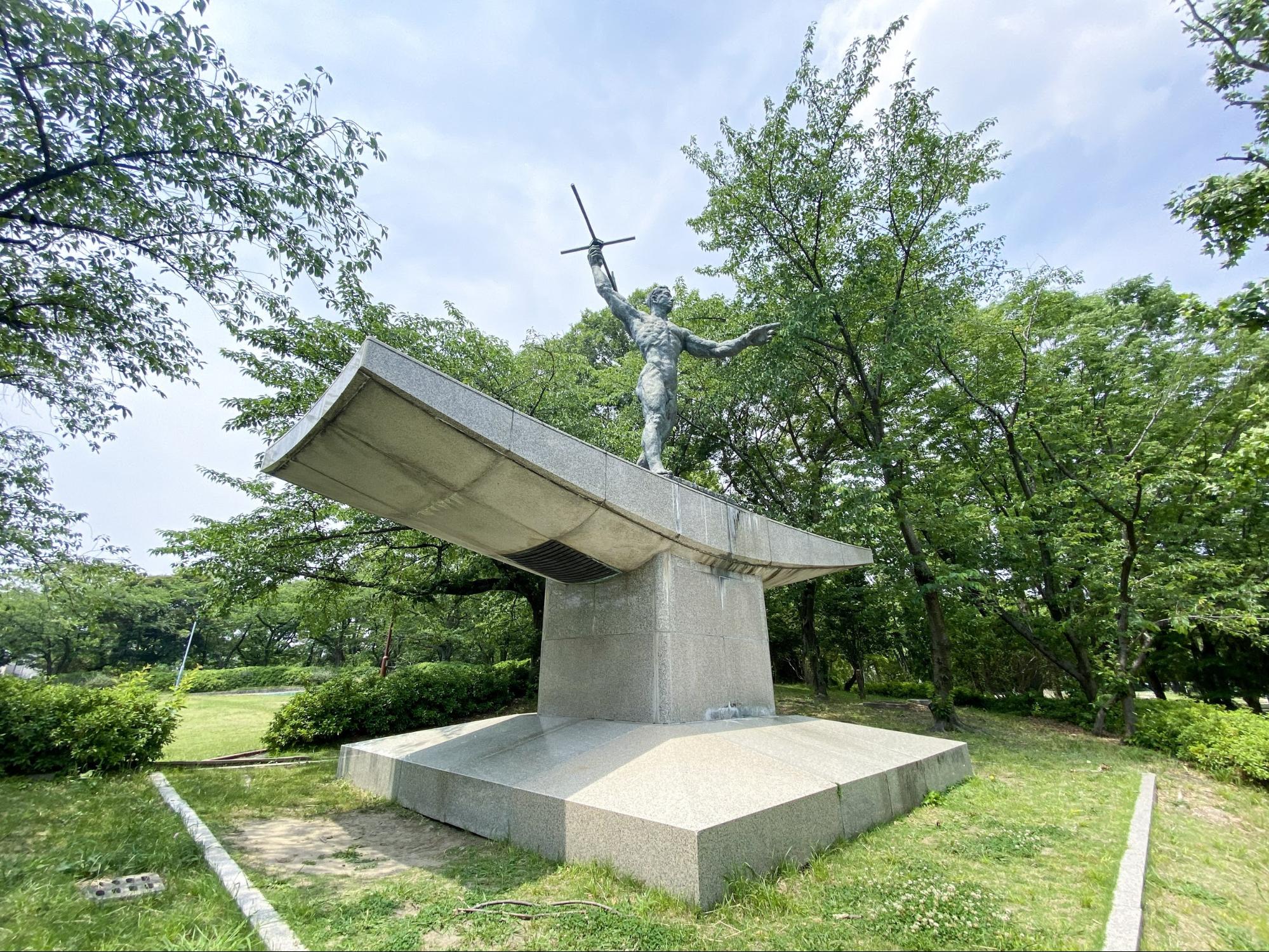
Standing tall is Kazuo Nonomura’s work “Seinen” (Young Man).
It was built in 1957, the year after the municipal subway started service, in the front rotary of the east exit of Nagoya Station as a symbol of Nagoya’s postwar recovery. It was removed in 1984 for construction of the Sakuradori Subway Line, and moved to Meijo Park in 1986. So the statue has long been familiar to citizens as a symbol of Nagoya City.
(10) “Mai” by Takeshi Ishida
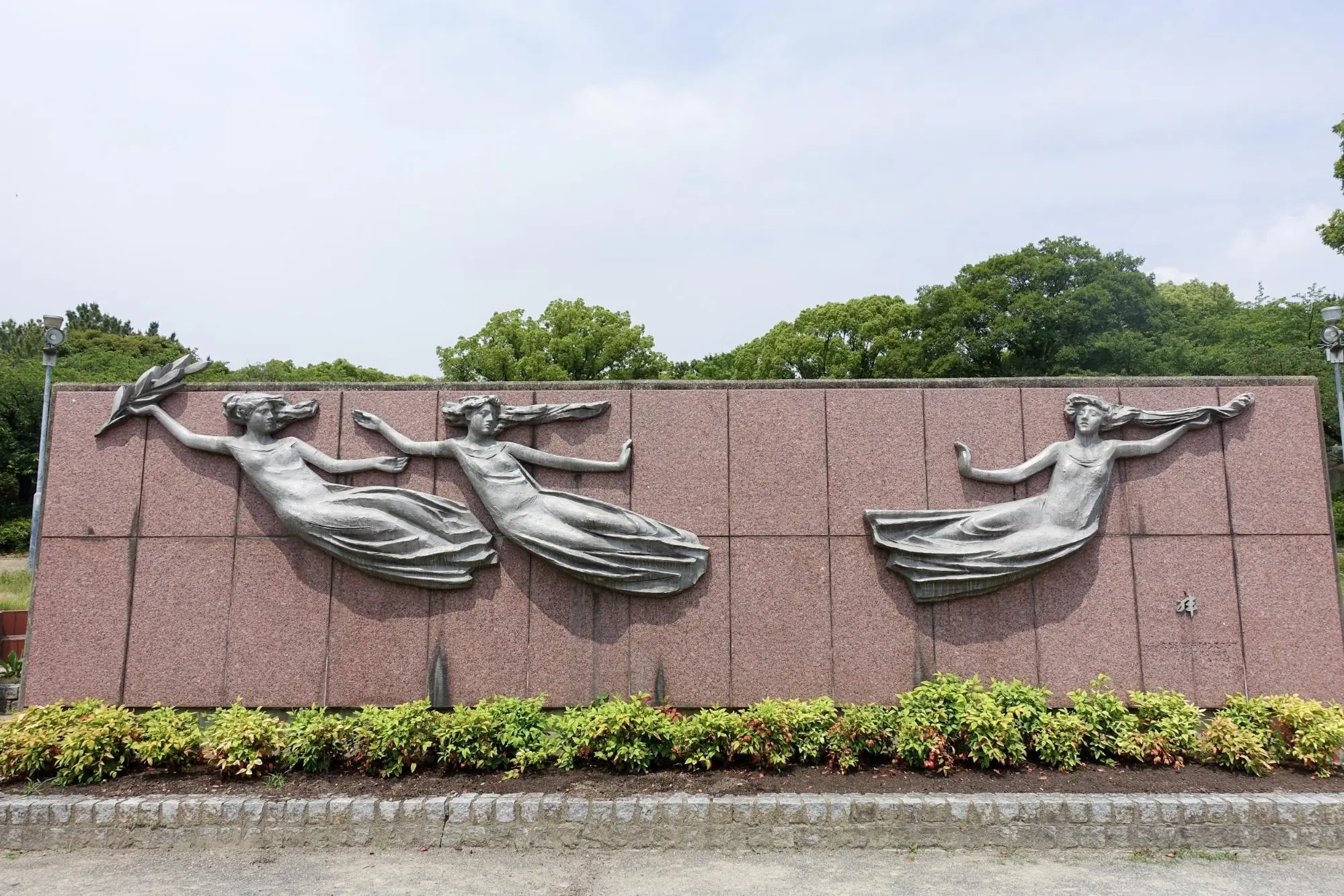
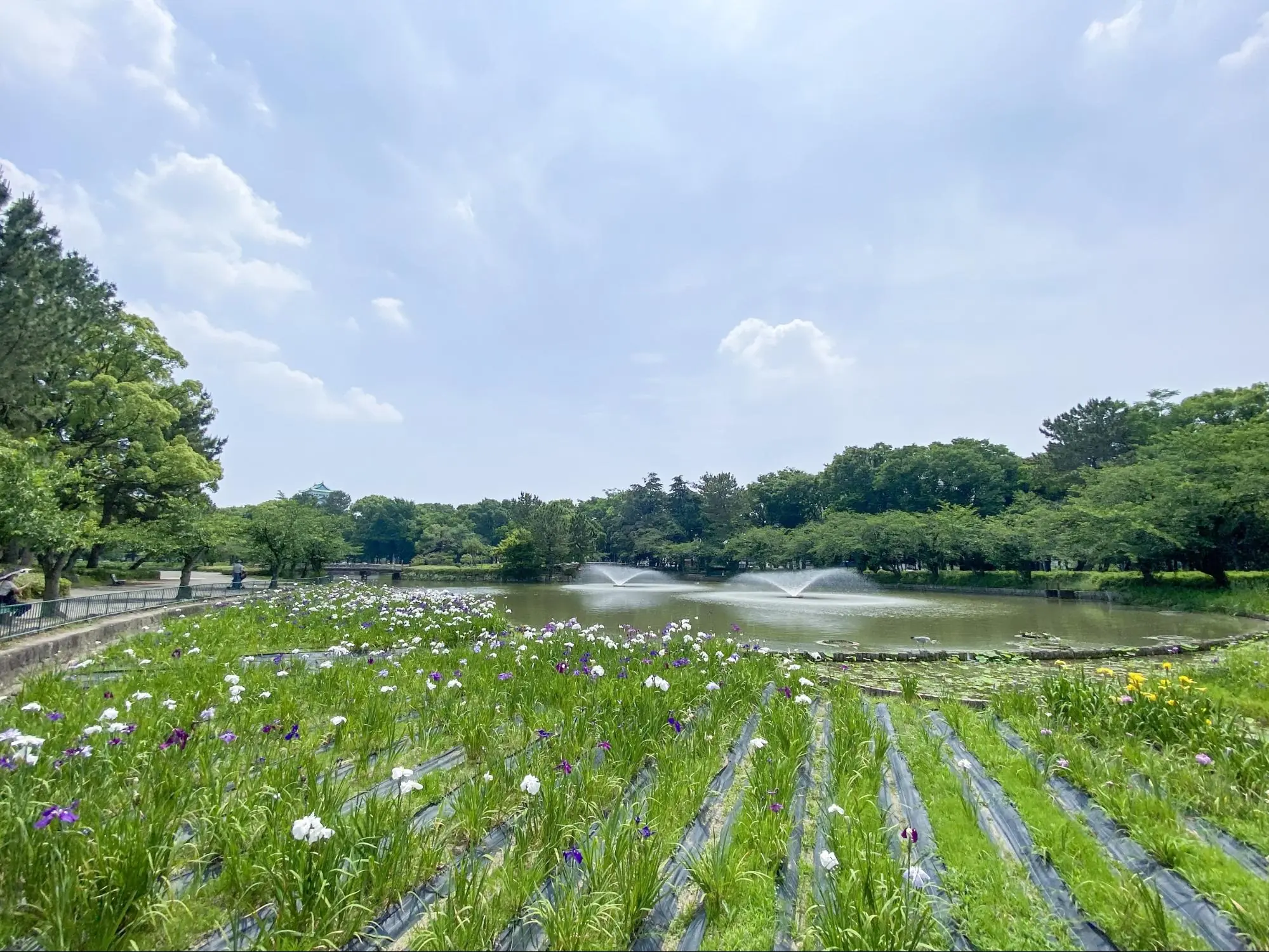
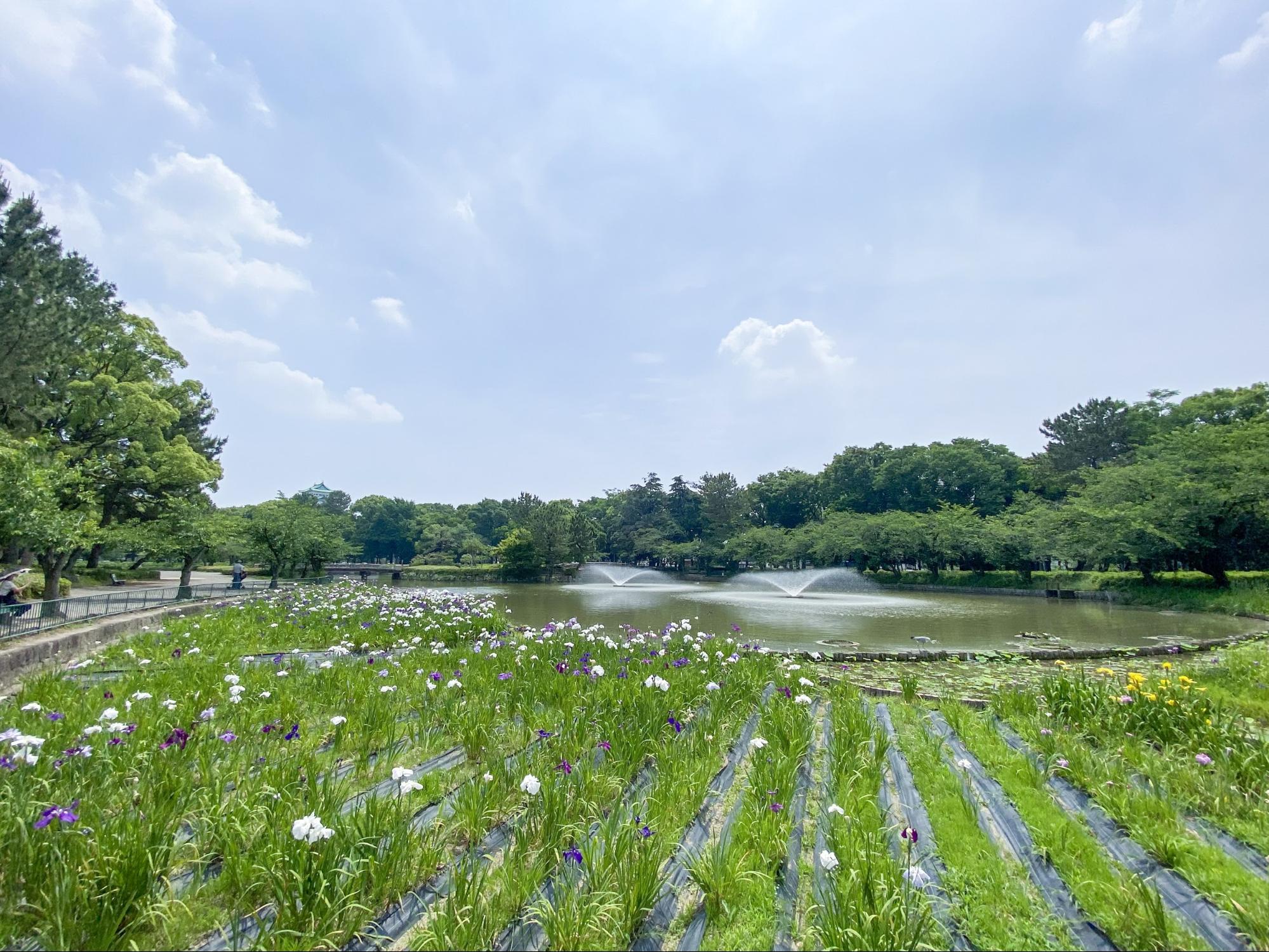
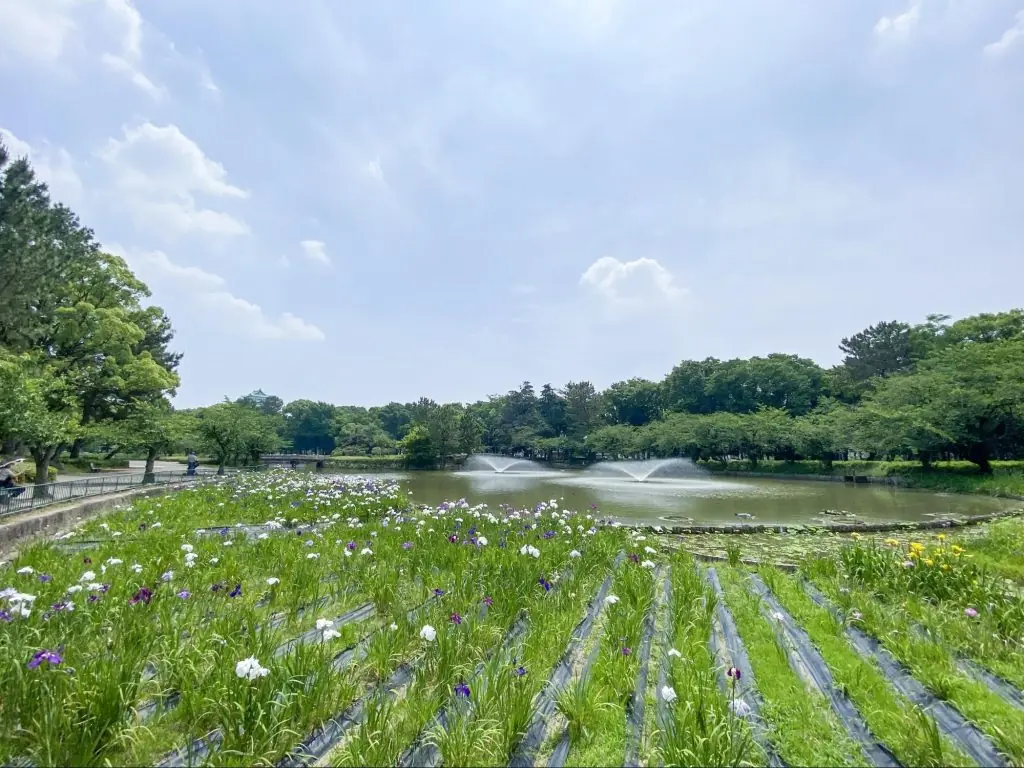
A large pond spreads out in front of Takeshi Ishida’s work “Mai” (dance). The hanashobu (Japanese honeysuckle) is magnificent!
(11) “Musume” by Churyo Sato
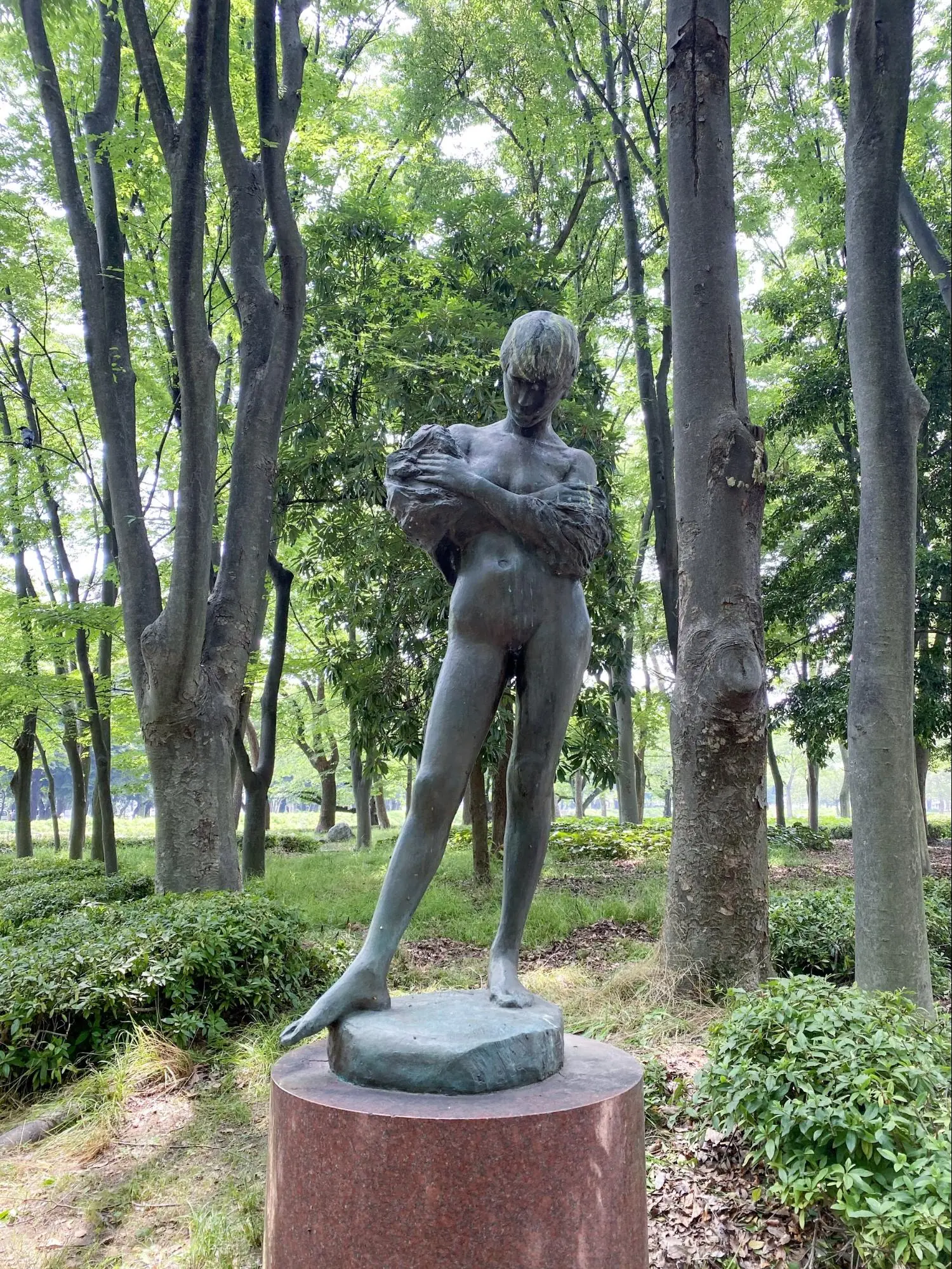
Now, the last artwork in the Meijo Park area.
“Musume” (girl) is a work by Churyo Sato, a sculptor from Miyagi Prefecture and one of Japan’s most famous sculptors. The latter half of the 20th century, when Churyo Sato was active, was a bubble period for Japan. It was a time when many bronze sculptures made their way into outdoor spaces. Therefore, you can see Churyo Sato’s works in many places in Japan.
Leaving Meijo Park, let’s head in the direction of the Noh Theater.
(12) “Shin-ryoku” by Shinsuke Yamamoto
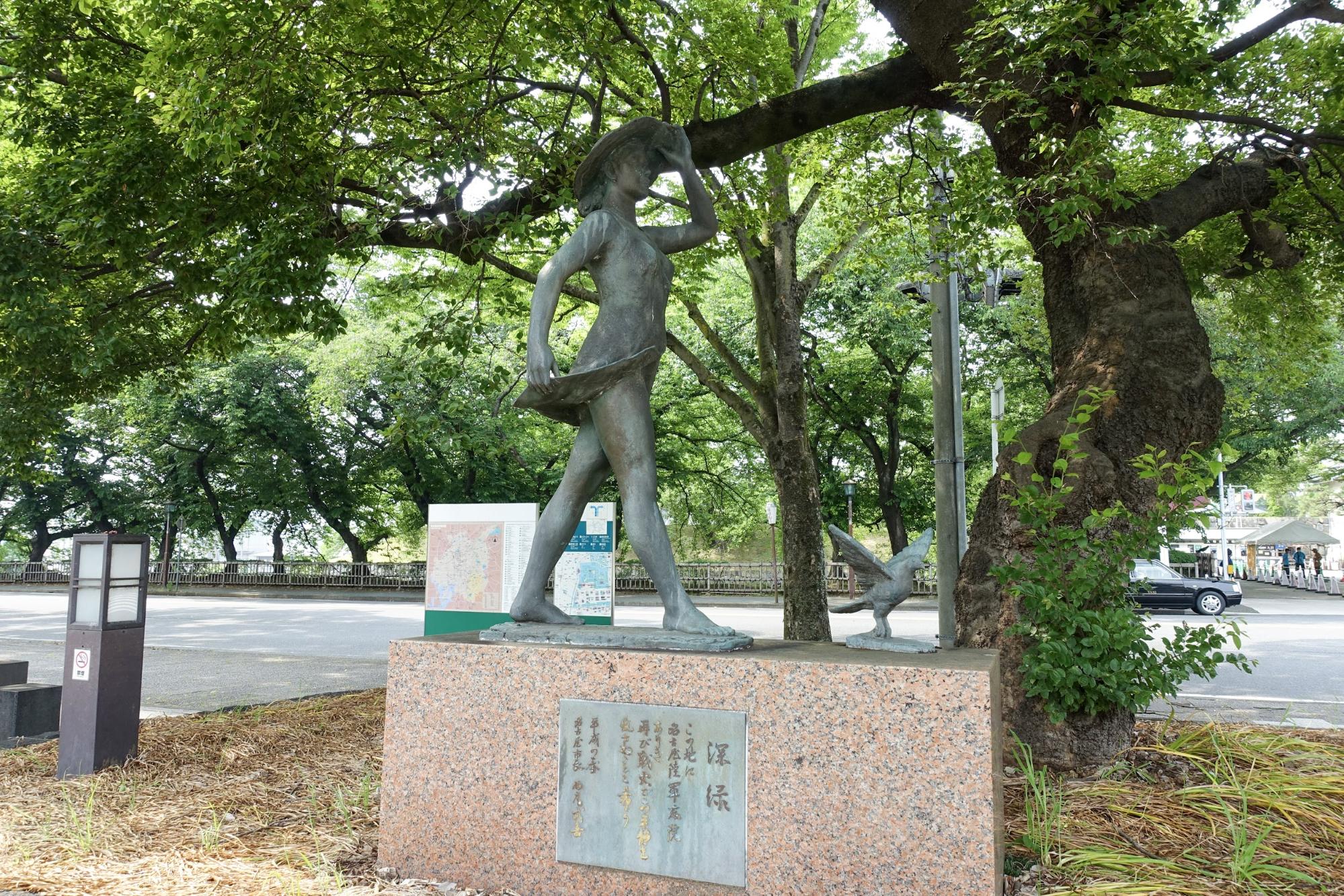
We found the artwork next to the bus stop! Be careful not to miss it.
(13) “Kiyomasa Kato” by Shizuo Kato
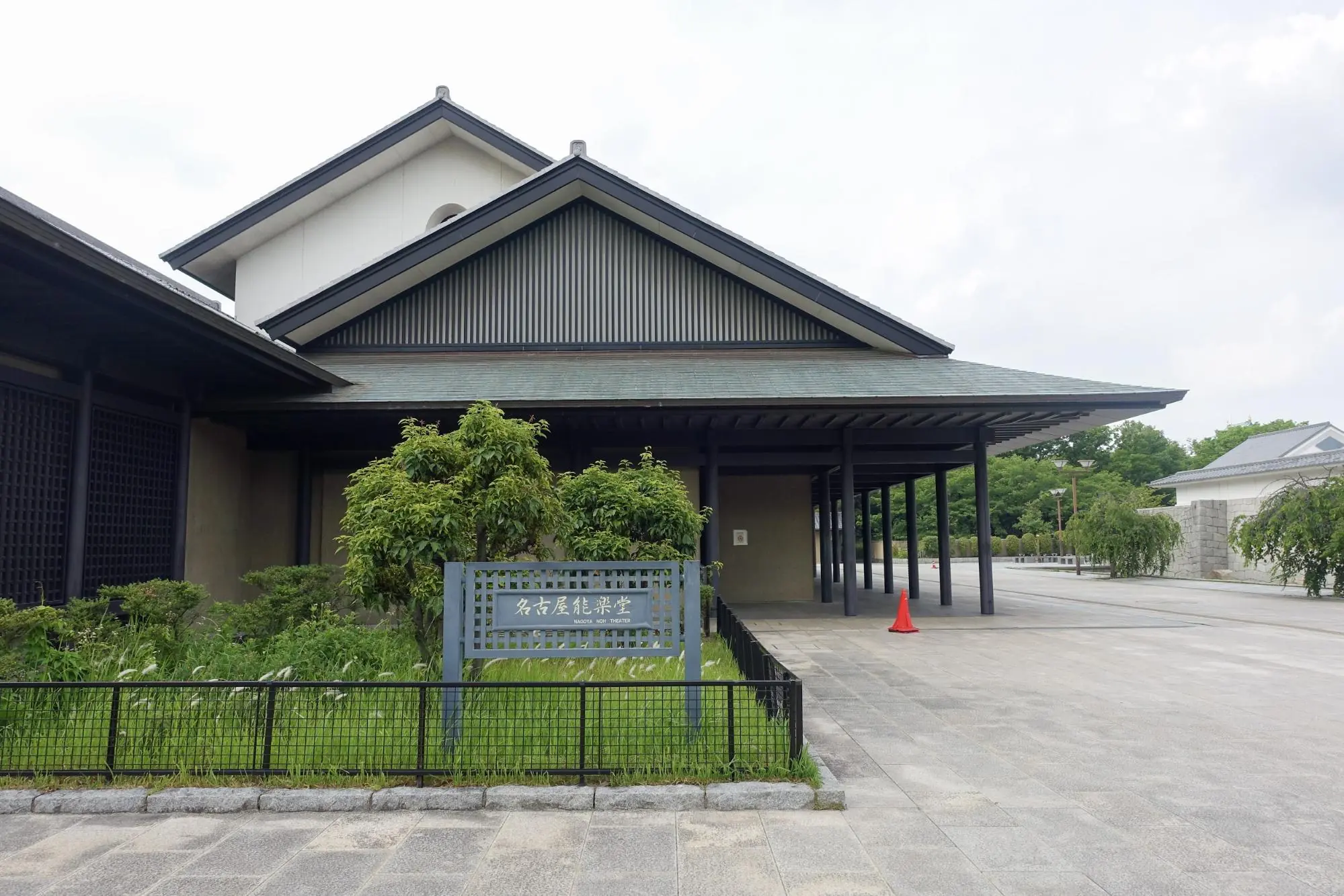
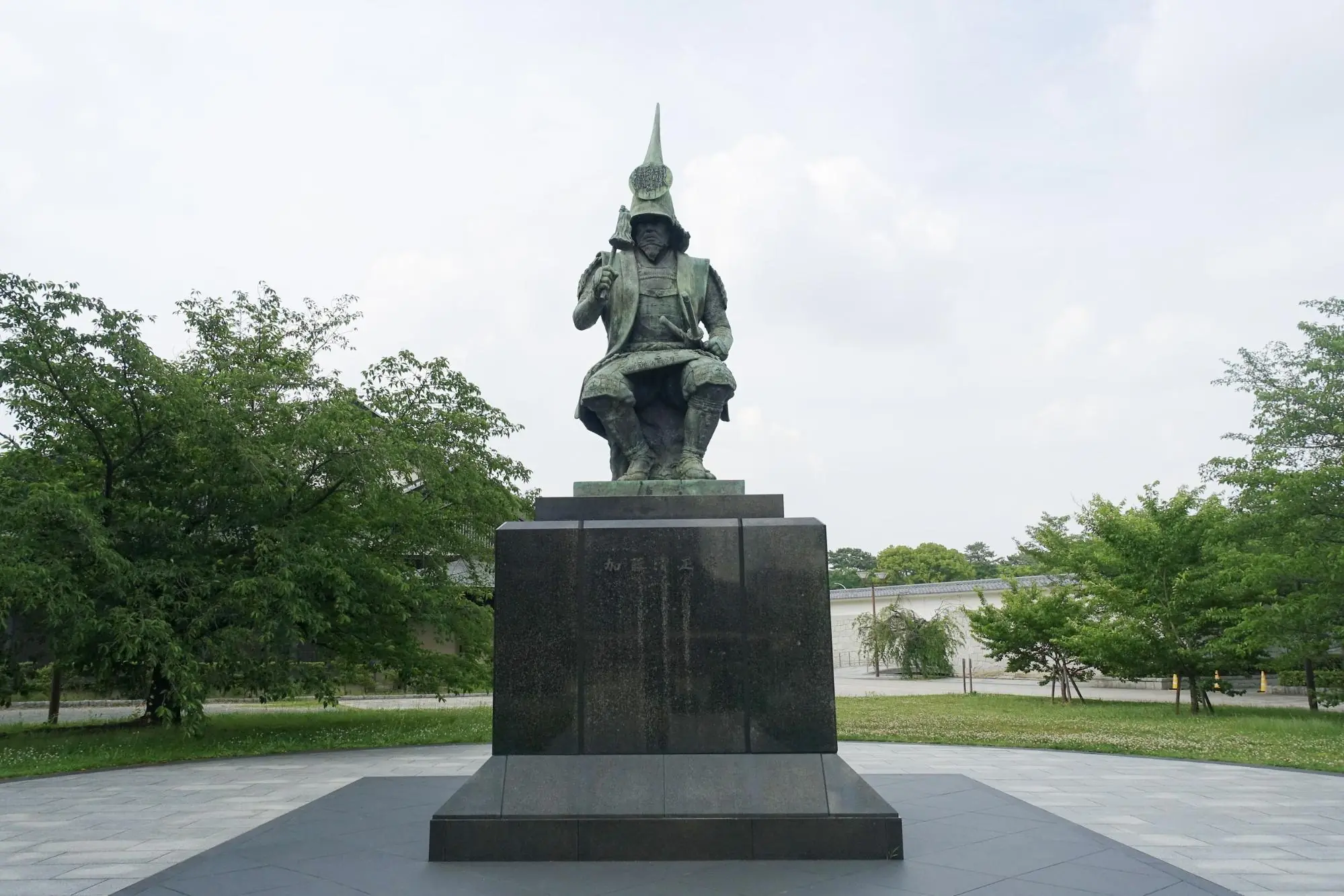
Standing tall in front of the Noh Theater is a statue of Kiyomasa Kato. Kiyomasa Kato was a warlord from the Azuchi-Momoyama period to the early Edo period. He possessed outstanding military prowess and rose from a mere soldier to a feudal lord through his many military exploits. This bronze statue expresses such bravery.








 おでかけ
おでかけ

 食べる
食べる

 暮らし
暮らし